


The Light in a Piece of Cloth, the Stillness of a Human Form: Inside YUJINART’s Century of Craft|TOKOWAKA
- Apr 29
- 7 min read
Updated: May 2
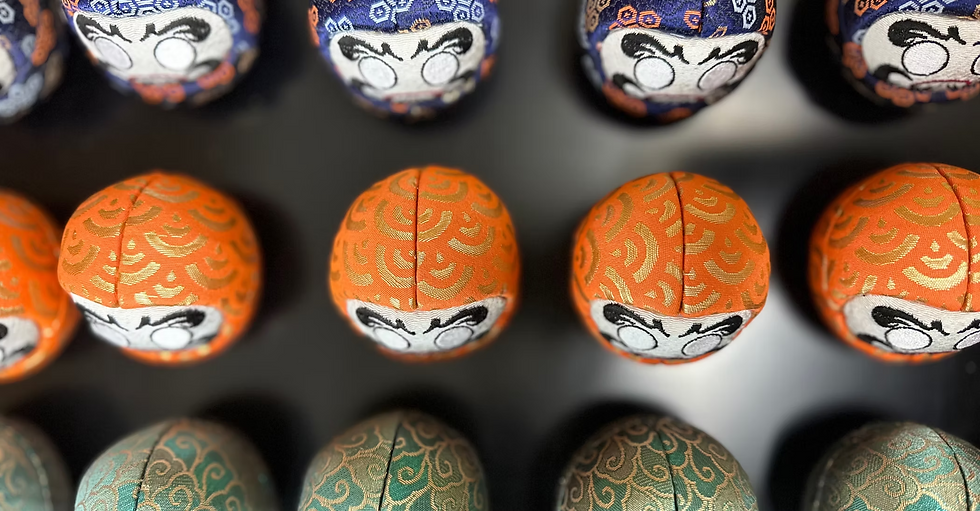
Light does not land on Nishijin-ori all at once. First, it catches the gold thread. Then, more slowly, it draws out the color held deeper in the weave. This is not the flat clarity of print, nor the kind of surface a camera can easily pin down. You have to stand closer. Move a little. Only then does the cloth begin to change.
That pace of looking is what YUJINART seems intent on preserving. Before anyone explains the work, the material has already begun to speak.
For many people, Japanese traditional craft occupies an uneasy position. It is admired, displayed, treated with care — but often from a distance. It belongs in a case, on a shelf, in a cultural category. It is less often allowed into the room, onto the body, or into the places where daily life actually happens.
What makes YUJINART interesting is its refusal to leave craft there. Nearly a century old, the family-run brand has taken Kyoto Nishijin-ori and Edo-period kimekomi doll-making and pushed them beyond the category of “traditional works.” Its projects bring these materials and techniques into interiors, fashion, and a broader contemporary conversation about how craft can still be understood, touched, and used.
From Asakusabashi, a Family Craft Passed Down for Nearly a Century
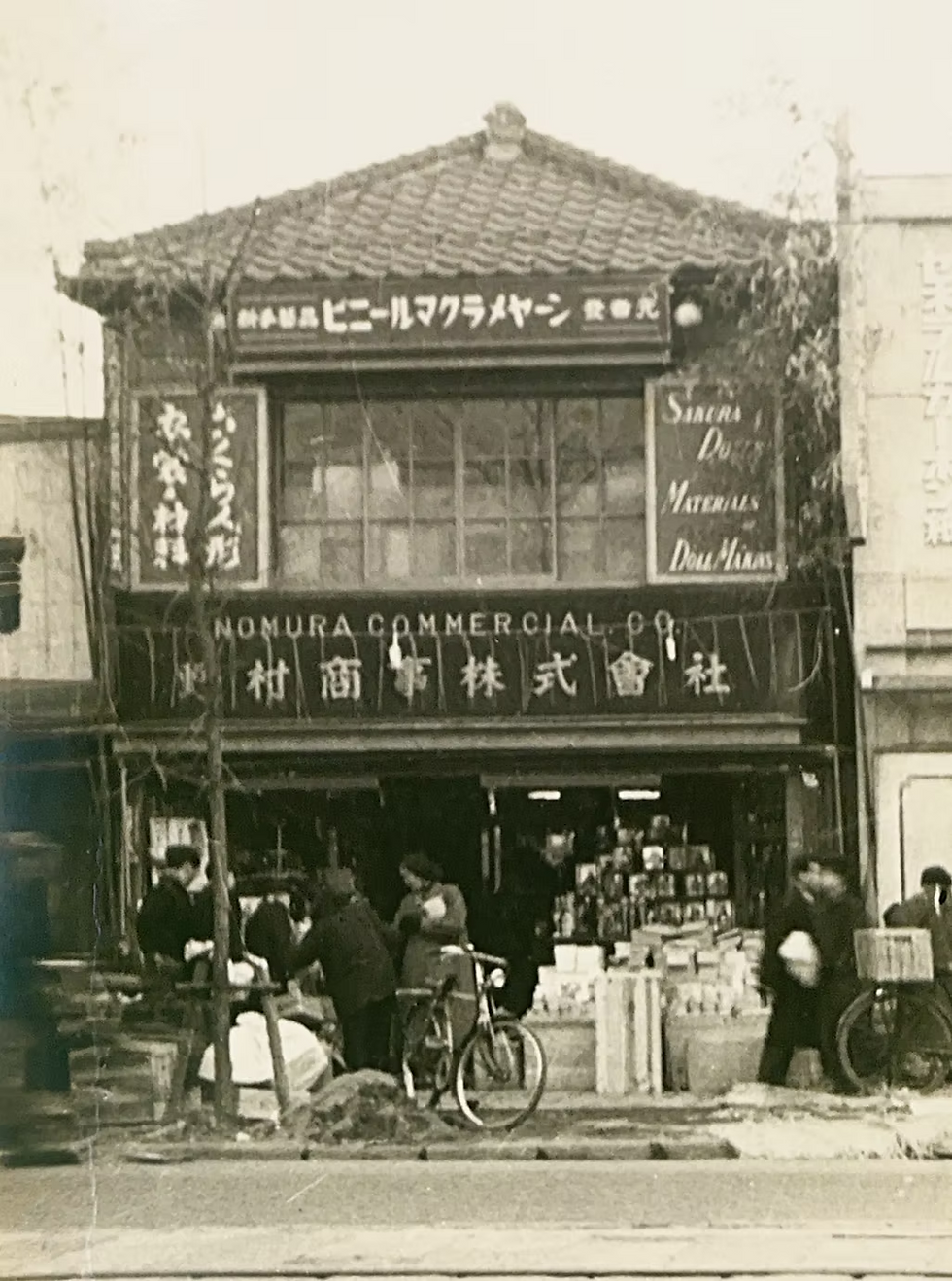
The story begins in 1927 in Asakusabashi, Tokyo.
That year, Kinu Kameda founded Hyakka, a workshop devoted at first to kimekomi dolls. It was a period when mass production was beginning to reshape everyday life, and handwork could easily have been pushed aside in the name of efficiency. But Kameda did not limit the business to finished dolls. She turned the workshop toward materials and instruction, offering doll-making kits so that more people could complete the work by hand.
The faces, bodies, and fabrics each required their own specialist processes. The materials included fine Kyoto Nishijin-ori and Yuzen textiles. Over time, Hyakka opened 50 classrooms across Japan. The technique was not kept in the hands of a few makers; it remained alive on many people’s tables.
Today, the family business is led by the fourth generation: Yu Hatori, Kameda’s great-granddaughter. Hatori studied fashion history and textile science at Japan Women’s University, a background that seems to shape the way she approaches material. For her, fabric is not only inheritance. It is something that can enter a room, meet contemporary taste, and breathe in a different register.

What YUJINART Holds Is Not Just Fabric, but Time That Can Still Be Unfolded
What Hatori inherited from her family was not only a name and a set of techniques. She also inherited an archive of antique Nishijin-ori textiles accumulated year by year since 1927. These fabrics are not archival entries in a database. They are time that can still be opened, spread out, and touched.
The appeal of Nishijin-ori is difficult to reduce to luxury or ornament. Its basic conditions are demanding enough. The yarn is dyed before weaving. Warp and weft are arranged according to complex patterns, allowing the design to emerge across the cloth with an almost relief-like depth.
Historically, Nishijin-ori was used in garments for the imperial family and aristocracy. It also appeared in armor, sashes, and dress accessories worn by military leaders. Beauty and durability were not separate concerns. To achieve its particular luster and density, weavers used gold leaf and silver thread. Ten meters of cloth could take weeks, sometimes longer, to complete.
The old textiles preserved by YUJINART carry a light that has been changed by age. They are not loud. Their force lies in a density that is difficult to reproduce now.

The Fineness of Kimekomi Dolls Lies Not Only on the Surface, but in the Process
That textile archive gives YUJINART’s kimekomi dolls a weight rarely found elsewhere.
Kimekomi dolls originated at Kamigamo Shrine in Kyoto. The technique begins with fine grooves carved into a wooden body; fabric is then tucked into those grooves, becoming both clothing and form. In practice, the process is far more demanding than it may appear. The body is made from paulownia wood powder and wheat starch paste. Its surface is built up in layers of gofun, a white pigment made from ground oyster shells. Only then does the cloth enter the carved channels.
The hand must be steady. The eye must be exact. The maker must know which piece of fabric belongs where. The turn of a robe, the curve of a face, the outline of a hairstyle — none of it rewards speed.

Every Finished Work Also Meets a More Practical Reality: The Materials Are Disappearing
The molds used by YUJINART carry another fragile lineage of craft. The company preserves molds and technical knowledge left by the late doll maker Jiro Hasebe, and it continues to use traditional materials.
But the number of craftspeople still able to supply these orthodox materials is shrinking, and the available stock is limited. This gives each work a sharper reality. It is not precious in some abstract sense. Each piece made means there is less material left for the next one.

Yu Hatori Is Not Trying to Keep Craft Unchanged. She Is Trying to Find Its Next Place.
Hatori has not turned these conditions into a posture of preservation for its own sake. She speaks, instead, through direction. If a tradition is to remain alive, it cannot be merely stored well.
YUJINART’s recent work makes that position clear. The company has begun to separate the language of kimekomi from seasonal dolls and reconsider it as a form of three-dimensional composition. How fabrics meet. How light rests on a surface. How a human figure, once abstracted, can become an object in its own right. Techniques that once belonged to dolls are being translated into a language for contemporary interiors.
The works no longer belong only to Hinamatsuri or Children’s Day. They can sit quietly in an entryway, living room, or study — the slowest and perhaps most rewarding point in the room.
When Nishijin-ori Leaves the Kimono, It Enters Sofas, Walls, and the Light of a Room
This shift is especially clear in YUJINART’s Oku Art series — works intended to be placed in space.
Once Nishijin-ori leaves the kimono, it becomes cushions, wall pieces, interior textiles, even a surface that changes the quality of light in a room. The material does not require a crowded setting. In fact, it often gains force against modern, minimal, or hotel-like interiors.
It quiets a space without emptying it. A piece of densely worked past time is folded into the corner of a contemporary room.


Craft Also Moves Onto the Runway, and Into More Public Visual Culture
YUJINART’s ambitions do not stop with interiors. In recent years, the brand has collaborated across fields, bringing craft into more visible and more complicated visual settings.
Its collaboration with BEAMS JAPAN brought Nishijin-ori closer to contemporary accessories. A limited MA-1 flight jacket made with Jägermeister Japan placed the German liqueur brand’s bold visual identity against the subtle sheen of Japanese woven textile — a direct and unlikely collision.
The textiles have also appeared on larger fashion stages, including Dress Camp’s Spring/Summer 2015 presentation at Paris Fashion Week and Yumi Katsura’s 2016 Paris haute couture show. A collaboration with the artist Tomomi Sawada pushed the same material in yet another direction, testing where it might go once it leaves the categories of clothing and decoration behind.

For Travelers in Japan, YUJINART Offers a Way to Spend Time With the Craft
Travelers in Japan can also take part in YUJINART’s kimekomi doll-making workshops. As the hand begins to work and the object slowly takes shape, the process reveals layers of craft that are not always visible when one is simply looking at a finished piece.
Iwatsuki is known as a “city of dolls.” Before trying the making process, visitors can also stop at the Iwatsuki Doll Museum and a Nishijin-ori exhibition space to understand the historical context of the craft. In Asakusa, a short walk from Sensoji Temple leads to the Nishisando shopping street, where visitors can enter a historically inflected space and encounter other types of craft, including swords and kabuto helmets.
What YUJINART offers is not just a brief activity. It is a way to spend time with tradition — to understand some of its background and then feel, through the hand, how it is made.
Details on class times, locations, and reservations are available through YUJINART’s official website and Instagram.
Craft Begins to Live When It Leaves the Display Case
Craft does not have to remain behind glass, admired from a careful distance. It can enter daily life. It can be touched. It can be used slowly.
Through YUJINART, what comes through most clearly is that plain, warm texture of use.
When afternoon light falls across the cloth, its colors shift gradually and hold the eye. The beauty that makes someone want to reach out and touch it is held in the woven patterns passed down from Kyoto, and in the doll-making techniques carried forward since the Edo period. These objects have crossed time into contemporary rooms without seeming out of place.
No deep background knowledge is required to come closer to craft.
Sometimes the first step is simply to notice the light. The rest follows from there.

資料來源:


Comments